ByJohn A
Understanding Fear and Greed in Crypto Markets
Fear and greed shape crypto markets as psychological forces that push prices beyond fundamentals. Data show risk-off moves during uncertainty and rapid buying during rallies, often amplified by media and crowd behavior. Traders monitor liquidity, volatility, and risk appetite to interpret shifts, applying disciplined, rules-based approaches. The balance between emotional signals and technical evidence remains critical, offering opportunity and risk in equal measure. The next question is how to calibrate this tension to avoid costly overruns.
What Fear and Greed Are in Crypto Markets
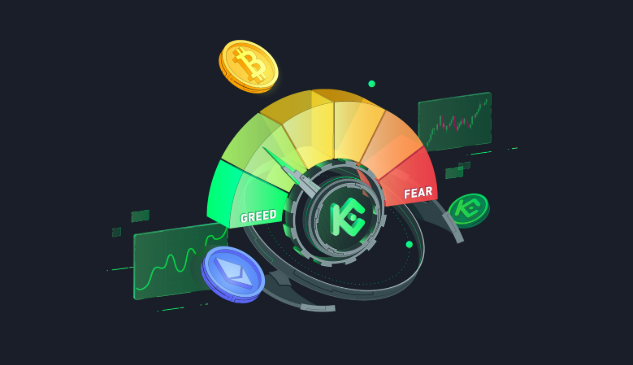
Fear and greed in crypto markets describe the psychological forces that drive price movements beyond fundamentals: fear typically prompts selling or risk-off behavior, while greed encourages buying or risk-on strategies. In this frame, fear metrics quantify downside anxieties, and greed indicators capture appetite for speculative exposure. Analysts interpret shifts with caution, recognizing emotional signals alongside technical data to assess potential risk versus opportunity in market dynamics.
See also: bugsnews
How These Emotions Drive Price Action and Risk
Investor sentiment in crypto markets shapes price action through observable patterns that reflect risk-on and risk-off dynamics.
Data indicate fear cycles amplify sell pressure during drawdowns, while greed incentives amplify rapid buys during rallies.
Traders monitor volatility, exposure, and liquidity to gauge risk tolerance shifts.
The result is asymmetric responses, where psychology and fundamentals intersect, shaping corrective moves and risk management strategies.
Reading the Signals: Media, FOMO, and Crowd Behavior
Media narratives and social signals shape crowd behavior by translating complex market dynamics into accessible cues. This analysis examines how media narratives influence sentiment, and how FOMO amplifies movements through crowd psychology. Observers note measurable spikes in attention, correlation with price shifts, and subsequent risk-taking. A cautious, data-driven lens highlights bias, information gaps, and the need for disciplined interpretation to safeguard freedom.
Practical Strategies to Trade Calmly Amid Volatility
Practical strategies to trade calmly amid volatility emphasize disciplined routines, objective risk assessment, and rules-based decision making. The analysis emphasizes fear psychology and risk management as central to execution, not emotion. Traders rely on transparent metrics, predefined stop-loss levels, position sizing, and contingency plans. Behavioral awareness reduces impulse trades, while backtesting supports expectations, helping freedom-oriented investors balance autonomy with disciplined risk controls.
Frequently Asked Questions
How Do Individual Biases Shape Crypto Trading Decisions?
Individually, biases shape crypto trading decisions via bias blindspots and susceptibility to herd psychology, creating overconfidence, tail-risk underestimation, and momentum chasing; prudent traders compensate with data-driven checks, diversification, and disciplined risk management to preserve freedom.
Can Fear and Greed Predict Long-Term Market Cycles?
Allusions hint that fear and greed generally fail to predict long-term cycles; nevertheless, fear cycles and greed indicators offer cautious, data-driven signals. The detached observer notes limited predictive power, guiding decisions toward disciplined risk management and freedom-aware investing.
What Metrics Reliably Measure Market Sentiment Now?
Metrics like social volume, volatility spikes, investor surveys, order book pressure, on chain sentiment, fear/greed indexes, funding rates, macro indicators, retail trading activity, search interest, NFT activity, token velocity gauge sentiment cautiously and data-driven, preserving freedom-oriented perspective.
Do Institutional Players Exploit Crowd Psychology in Crypto?
Institutional players may engage in institutional manipulation, exploiting crowd psychology exploitation to steer crypto flows, though evidence remains nuanced; observers should apply data-driven, cautious analysis, acknowledging psychological dynamics while respecting individual autonomy and the desire for financial freedom.
How Can Investors Build a Personalized Risk Tolerance Profile?
How should investors build a personalized risk tolerance profile? They should conduct a structured personal assessment, evaluate time horizon and loss comfort, and integrate data-driven metrics, yielding a clear risk tolerance framework while preserving autonomy and freedom in decisions.
Conclusion
In markets buffeted by fear and greed, data meets psychology at a fragile crossroads. Prices climb on optimism even as risk metrics whisper caution; they fall when headlines scream certainty, and liquidity dries as discipline erodes. Juxtaposition reveals a paradox: crowd euphoria often precedes peril, while measured, probabilistic thinking tempers impulse. The prudent trader measures signals, not sway, balancing backtested resilience with humility before uncertainty, and guarding exposure as emotions surge and recede.